


Product Description
Overview
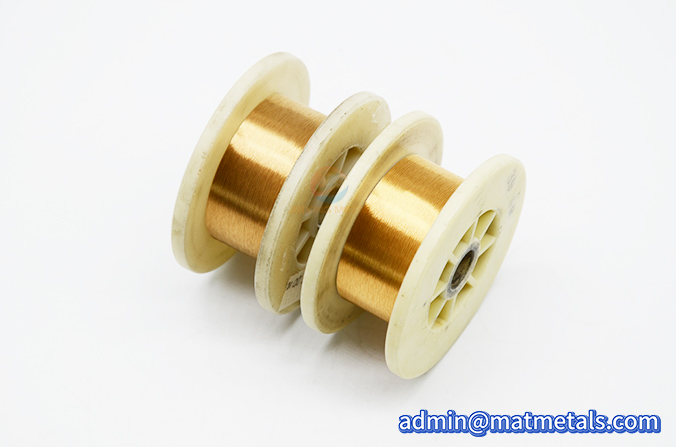
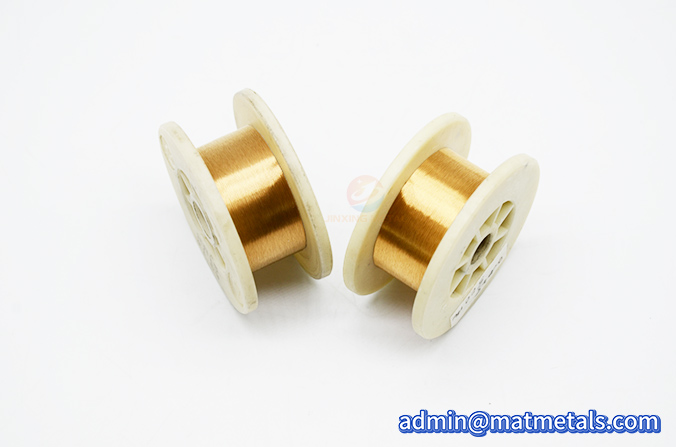
Au-Plated Tungsten Wire is a composite metal wire material consisting of a uniform, dense gold layer electroplated or electroless plated onto the surface of high-purity tungsten wire, combining the high-temperature resistance and high strength of tungsten with the high conductivity, oxidation resistance, and corrosion resistance of gold. They can be used as electrodes, probes, and emission materials in semiconductor packaging, electric vacuum fields, aerospace, medical devices, and scientific research.
As a professional supplier of precious metal products, we can provide customers with different customized products, and the price is more cost-effective than that of European and American suppliers. If you are interested, you can contact us at any time.
Properties
- It is resistant to extremely high temperatures, with a thermal expansion coefficient of only about 4.5 μm/(m·K), and excellent dimensional stability when the temperature changes drastically, avoiding deformation problems caused by thermal expansion and contraction.
- Tungsten itself has a tensile strength of 400–500 MPa, and the gold plating does not affect the mechanical strength of the substrate, especially for delicate parts that are subject to mechanical stress.
- The conductivity is significantly improved, the gold plating reduces the surface resistivity, and the high-frequency signal transmission loss is smaller, making it suitable for precision electronic transmission scenarios.
- The gold layer effectively isolates oxidation and chemical corrosion, and the corrosion resistance of gold-plated tungsten wire is much higher than that of ordinary tungsten wire, especially suitable for high humidity and acid-alkali environments.
- Optimized soldering performance and greatly improved wettability by the gold plating layer for stronger soldering and reduced contact problems in electronic component assembly.
- The surface finish is high, and the gold's shiny appearance after gold plating is not only beautiful, but also reduces the secondary emission of electrons and improves the reliability of precision instruments.
Dimension
| Grade | W1 |
| Diameter | 0.01-3mm |
| Gold plating thickness | 0.1–10 μm |
| Tensile strength | 400–500 MPa |
| Density | 19.3 g/cm³ |
| Surface | Polishing |
| MOQ | 2PCS |
| Standard | ASTM |
| Delivery time | 15-25DAYS |
| Certification | ISO 9001 |
Application
1. Electronics and semiconductor manufacturing
Precision electrodes and connectors
- High-frequency circuit contacts: The gold-plated layer stabilizes the contact resistance at 1–5 mΩ, which is significantly better than ungold-plated tungsten wire, and is used in 5G base stations, satellite communication modules, etc.
- Copier electrode: Au-Plated Tungsten Wire replaces ordinary tungsten wire, solving the problem of degradation of copy quality caused by electrode corrosion in a high-humidity environment, and the surface gold plating has both beauty and functional improvement.
Vacuum coating core components
- Evaporation source material: As a heating carrier for semiconductor coatings (such as optical lens reflective layers), it stably evaporates gold, aluminum, and other materials in a vacuum environment of 2000°C, and the coating prevents coating contamination caused by oxidation of tungsten wires.
- Multi-filament chamber detector anode: used as an anode wire in particle physics experiments, using its low secondary electron emission characteristics to achieve high-precision position resolution at the level of 0.224 mm.
2. Aerospace and scientific research
- Extreme Environment Sensors: Electrode materials used in satellite temperature sensors that maintain dimensional stability over temperature differences of -180°C to 400°C.
- High-energy physics experimental device: It constitutes a multi-filament chamber position-sensitive detector to maintain signal stability in a strong radiation environment.
3. Medical field
- Cardiac guidewire and occluder: Gold-plated tungsten wire serves as the core material for X-ray development, embedded in the guidewire or occluder stent, allowing doctors to accurately position it in real time during surgery.
- Minimally invasive surgical electrodes: tungsten matrix can withstand high temperatures above 3000°C, and the gold plating layer reduces the contact resistance of the electrode and reduces tissue scorching and adhesion, which is suitable for delicate surgeries such as neurosurgery and urology.
- Transmission parts of surgical robots: The inside of the robotic arm of Da Vinci robots and other equipment uses gold-plated tungsten wire to transmit action instructions, using its high tensile strength to achieve millimeter-level precision operation.
Processing
(1) Substrate pretreatment: select high-purity tungsten wire, straighten and cut to remove surface oil, oxide scale, and burrs to ensure that the surface is clean and smooth.
(2) Surface activation treatment: acid-alkali micro-etching, ultrasonic cleaning, and plasma activation are used to improve the surface adhesion of tungsten wire and base for subsequent gold plating.
(3) Pre-plating priming: first, pre-plate a thin nickel/copper transition layer to seal the pores of the tungsten wire, prevent the high-temperature diffusion between the gold layer and the tungsten matrix, and enhance the bonding force.
(4) Electroplating gold plating: Adopt a precise continuous electroplating process to uniformly deposit the gold layer on the surface of the tungsten wire, and accurately control the thickness, uniformity, current, and temperature of the gold layer.
(5) Washing neutralization: multi-stage pure water countercurrent cleaning neutralizes the residual plating solution to avoid oxidation, discoloration,n and corrosion in the later stage.
(6) Heat treatment annealing: low-temperature vacuum annealing eliminates internal stress, cures the coating bonding force, and prevents later bending and peeling off at high temperature.
(7) Finishing and straightening: Secondary precision straightening and sizing to ensure that the straightness and roundness of the wire meet the standard.
(8) Testing and sorting: detect the thickness, adhesion, conductivity, appearance defects, and tensile strength of the coating, and eliminate unqualified products.
(9) Rewinding packaging: winding according to specifications, moisture-proof sealed packaging, and storage away from light and moisture.
Pictures
FAQ
Q: Why is gold plating used on tungsten wire?
A: Corrosion resistance and conductivity optimization: The gold plating prevents the tungsten wire from oxidizing in high-temperature/humid environments, significantly reducing the contact resistance (gold resistivity 2.4×10⁻⁸Ω m vs tungsten 5.6×10⁻⁸Ω·m), suitable for precision electrodes, semiconductor equipment, and other scenarios.
Q: What is the standard thickness of the gold plating?
A: General range: 0.10–10.00μm, depending on the application:
Consumer electronics: 0.5–1.0 μm
Industrial equipment: 1.0–3.0μm
Aerospace: 3.0–5.0μm
Key requirements: Thickness deviation of ≤± 10% and usually 2–5 μm nickel coating to enhance adhesion.
Q: What are the minimum and maximum diameters available?
A: Minimum diameter: 22 μm (for photovoltaic cutting, tensile strength ≥ 6,850 MPa)
Maximum diameter: 1.000 mm (industrial electrode/heating element).
Coating adaptation: filament (<50μm) coating accounts for 3–5% by weight; coarse wire (≥50μm) is fixed at about 0.5μm.
Q: How should gold-plated tungsten wire be stored?
A: Environment: temperature 15–30°C, humidity ≤ 50% RH, dark from light and sulfur.
Packaging: vacuum sealing + desiccant, anti-static bag for the inner layer, anti-pressure for the outer layer.
Expiration date: 12 months unopened≤; It should be used within 24 hours after opening.
Please leave your information to get the latest quotation and product catalogue!