


Product Description
Overview
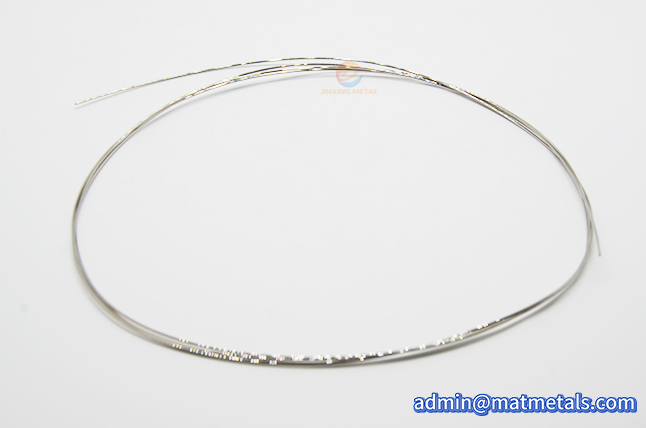
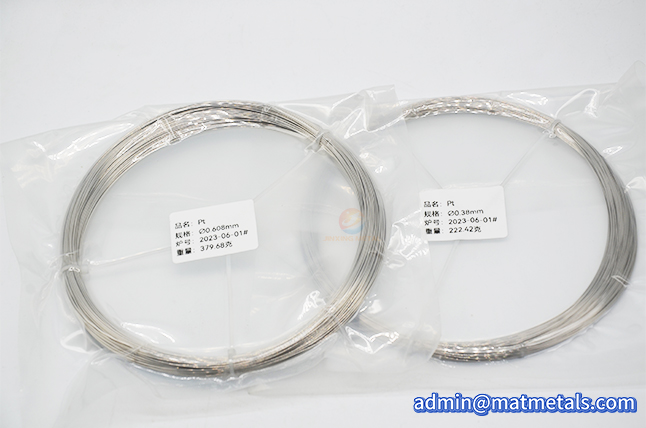
The Platinum Thermocouple Wire is a precious metal temperature sensor used to accurately measure high temperatures. It typically consists of a pair of pure platinum wire and platinum-rhodium alloy wire (such as platinum-rhodium-10), utilizing the principle of two different metals generating voltage under temperature differences. Its main advantages are high measurement accuracy, stable performance, and long-term use in oxidizing environments up to 1600°C. Therefore, it is widely used in industrial fields such as steel smelting, glass manufacturing, and ceramic sintering that require precise high-temperature control.
Platinum Wire Features
- The thermal potential has high stability, good repeatability, a stable output signal, and can still maintain high accuracy after long-term use.
- It has a high melting point, high density, moderate hardness, and good ductility and processing properties.
- It has outstanding corrosion resistance and oxidation resistance, and is not easy to oxidize or corrode in most chemical environments, making it suitable for use in harsh chemical environments.
- It has good long-lasting strength and creep resistance at high temperatures, and its shape and size remain stable even at sustained high temperatures.
Dimension
| Material | Pt |
| Diameter | Φ0.5mm-1mm |
| Length | 300-2150mm |
| Purity | 99.95%-99.99% |
| Density | 21.45 g/cm³ |
| Melting Point | 1768℃ |
| Adaptive thermocouple | Type S (Pt10Rh-Pt)/R-type (Pt13Rh–Pt) anode |
| Standard | ASTM B684/GB/T |
| Delivery time | 20-30days |
| Certification | ISO 9001 |
Platinum Wire Application
| High-purity platinum wire | Micro high-temperature sensors, micro analytical instruments, and precise temperature measurement for trace amounts; |
| Coarse-diameter platinum wire | Heavy-duty industrial kilns and long-cycle continuous production scenarios improve the anti-erosion and anti-aging life. |
| Complete set of platinum-rhodium thermocouples | Metallurgy, glass, and ceramics industries are equipped with high-temperature measurement consumables as standard. |
1. Metallurgical industry
Steel heating furnaces, annealing furnaces, forging furnaces, precious metal melting furnaces, and non-ferrous metal smelting kilns should be monitored at a high temperature of 1300~1600°C for a long time.
2. Heat treatment industry
Vacuum annealing, high-temperature quenching furnace, powder metallurgy sintering furnace, cemented carbide/special ceramic sintering production line, to ensure the consistency of workpiece heat treatment.
3. Metrology and calibration field
As a standard thermocouple and reference temperature measurement element, Platinum Thermocouple Wire is used for laboratory temperature calibration, metrology institute constant temperature reference, industrial thermometer calibration, and is the core material for high temperature scale transmission.
4. Precision analytical instruments
Laboratory analytical equipment, such as muffle furnaces, high-temperature drying ovens, thermogravimetric analyzers (TGA), and differential heat analyzers (DSC), has built-in temperature measurement sensors.
5. Aerospace
Aero engine hot-end component testing, gas turbine high-temperature test bench, and aerospace material high-temperature aging test.
6. High-end manufacturing
Temperature measurement in the preparation process ent of special alloys, superalloys, single-crystal materials, and heat-treatment temperature control of high-end military parts.
7. Chemical field
Fine chemical high-temperature reactors, high-temperature pyrolysis plants, and catalyst high-temperature activation furnaces.
8. Scientific research industry
The high-temperature experimental platform of the School of Materials, Physical and Chemistry Laboratory, and Research Institute of Universities is used for scientific research measurements, including high-temperature materials research and development, oxidative corrosion experiments, and high-temperature phase change research.
Processing
(1) Raw material purification: select high-purity platinum raw materials, remove impurities through chemical and electrolytic methods, and ensure accurate temperature measurement from the source.
(2) Melting ingots: Melt platinum at high temperature in a vacuum or inert gas environment, and pour it into a dense and defect-free platinum rod raw material.
(3) Hot forging and hot rolling: high-temperature beating and rolling of platinum rods to compact the internal structure to make the material stronger and convenient for subsequent processing.
(4) Multi-pass wire drawing: use different specifications of molds to stretch step by step, and pull the coarse platinum rod into fine platinum wires of different thicknesses.
(5) Intermediate annealing: high-temperature heating relieves the internal stress caused by wire drawing, prevents the wire from becoming brittle, and stabilizes the temperature measurement performance.
(6) Fine drawing and straightening: Finally, precise sizing and polishing are used to straighten the wire to ensure that the size is standard and the surface is smooth and flawless.
(7) Fixed-size cutting: cut into fixed lengths according to the needs of use, trim the burrs of the thread head, and facilitate direct processing and assembly.
(8) Finished product testing: Strictly check the size, purity, and thermoelectric parameters to ensure compliance with thermocouple use standards.
(9) Cleaning packaging: clean the surface of the wire, vacuum seal the packaging, and prevent contamination and oxidation during storage and transportation.
Pictures
Please leave your information to get the latest quotation and product catalogue!