



Product Description
Overview
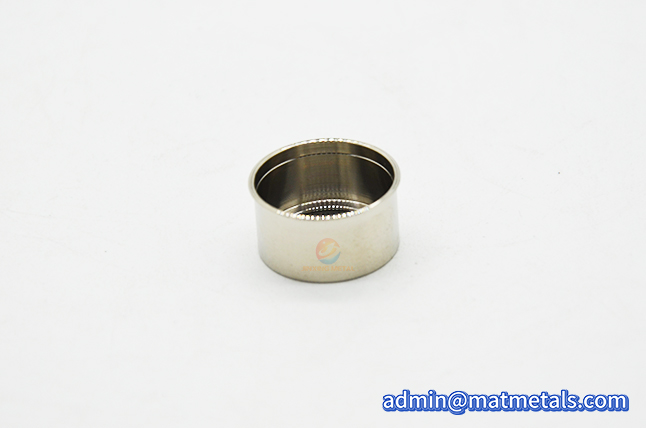
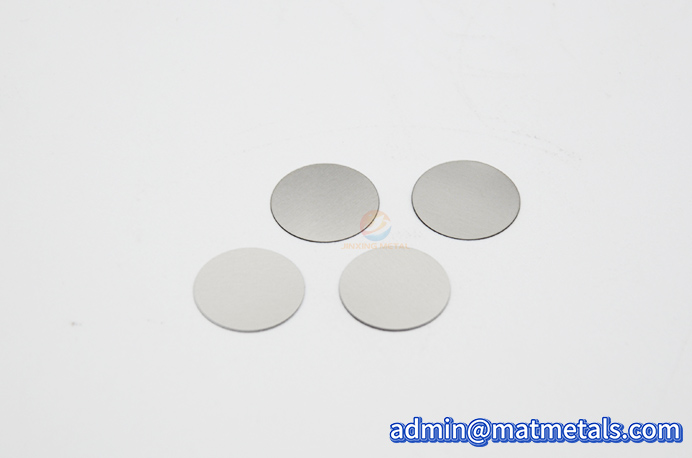
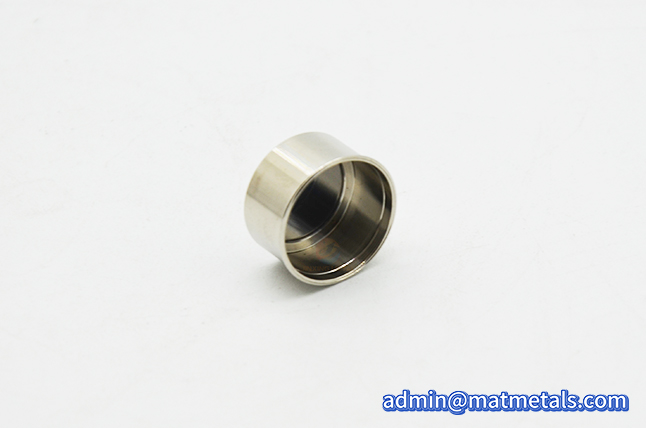
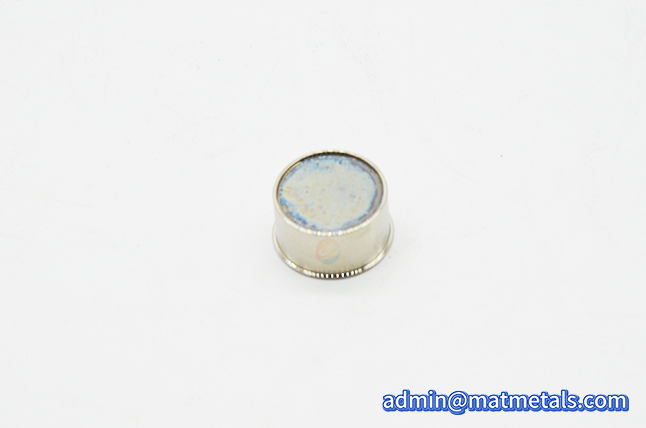
Beryllium ConFlat Flange is a high-vacuum sealing structure, mainly composed of three parts: a metal base (usually stainless steel), a light-transmitting medium (beryllium window), and a sealing assembly. It is used to isolate the vacuum environment from the outside atmosphere while allowing efficient penetration of radiation such as X-rays, and is widely used in X-ray analysis, synchrotron radiation experiments, and particle accelerators.
Our company has over twenty years of professional experience in the production and sales of non-ferrous and precious metals, and can supply customers with high-quality customized products. If you are interested, please feel free to contact us via email.
Beryllium Properties
- The perfect combination of lightweight and high strength, beryllium has a density of only 1.85 g/cm³, a tensile strength of up to 500-600 MPa, and the highest specific strength (strength/density) among metals, ensuring that components are not easily deformed under extreme conditions, especially suitable for high-precision instruments and spacecraft structures.
- Excellent thermal performance, high thermal conductivity, better than most metals, excellent heat dissipation performance, and structural stability can still be maintained in high-temperature environments.
- It is completely non-magnetic and does not interfere in a strong magnetic field environment, making it suitable for precision instruments such as MRI equipment and aerospace navigation systems.
- Excellent corrosion resistance, the surface can form a dense oxide film (BeO), effectively resisting corrosion in the atmosphere, fresh water, and acidic environments.
Specification
| Material | Be1 |
| Purity | 99.0%–99.5% |
| Size | According to the drawing |
| Grade | CF16-CF200 |
| Density | 1.85 g/cm³ |
| Thickness | 0.05–1.5 mm |
| Vacuum rating | UHV 10⁻¹¹~10⁻¹³ mbar |
| Transmittance reference(10 keV) |
0.1 mm Be:≈90% 0.2 mm Be:≈80% 0.5 mm Be:≈50% |
| MOQ | 2PCS |
| Delivery time | 25-30DAYS |
| Certification | ISO 9001 |
Application
1. X-ray fluorescence analysis system
As a key component of the X-ray fluorescence analyzer, the Beryllium ConFlat Flange is used to isolate the vacuum environment from the atmosphere while allowing X-rays to penetrate efficiently to ensure the accuracy of sample analysis. It is especially widely used in geological exploration and metal material composition analysis.
2. CT scanner and X-ray machine
As a window between the X-ray source and the detector, the beryllium window flange ensures that X-rays penetrate human tissues efficiently in CT scanners while insulating the vacuum environment.
3. Nuclear medicine equipment
In radiotherapy equipment and radioisotope detectors, a 5 mm thick beryllium window ensures high penetration of low-energy X-rays while filtering out interfering particles.
4. Industrial non-destructive testing
In X-ray flaw detectors and industrial CT systems, beryllium window flanges serve as detection windows, ensuring that X-rays efficiently penetrate metal/composite materials and detect internal defects.
5. High vacuum electronic devices
In vacuum coaters, particle accelerators, and high-precision optical instruments, beryllium flanges serve as viewing windows, allowing light or microwaves to pass through while maintaining a vacuum environment.
Processing
(1) Preparation of high-purity beryllium powder by electrolysis, powder impact milling and hot isostatic pressing technology to ensure the purity and performance stability of the material.
(2) Cold rolling of beryllium plate with a small processing rate (6%-10%), usually 6-10 passes, to improve material uniformity.
(3) The cold-rolled beryllium plates are stacked between the smooth stainless steel plates, and put into a high-vacuum furnace for high-temperature (> recrystallization temperature) pressure leveling
(4) For extremely thin beryllium windows, the 190-200μm original beryllium sheet is thinned to 70-80μm by a chemical corrosion process to obtain a clean activated surface.
(5) Use a lathe to process the outer diameter and thickness of the flange, and use milling or drilling to process bolt holes and sealing surfaces to ensure dimensional accuracy.
(6) For vacuum flanges, the roughness of the sealing surface should be Ra<0.8μm.
(7) Comprehensive quality testing, such as non-destructive testing, mechanical property testing, surface quality, dimensional accuracy, air tightness, etc.
Pictures
Packing
Please leave your information to get the latest quotation and product catalogue!