


Product Description
Overview
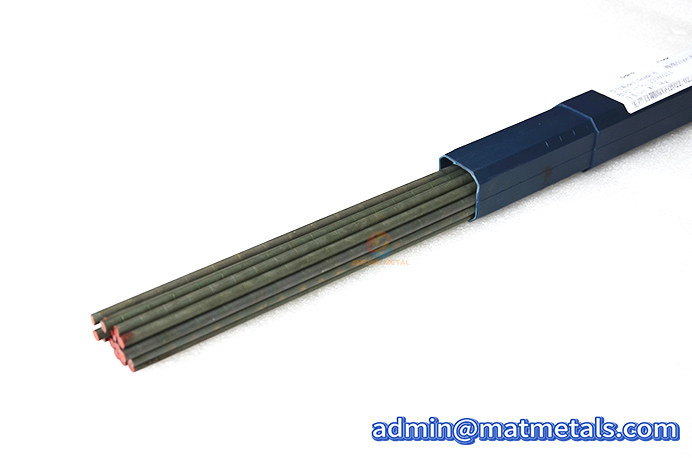
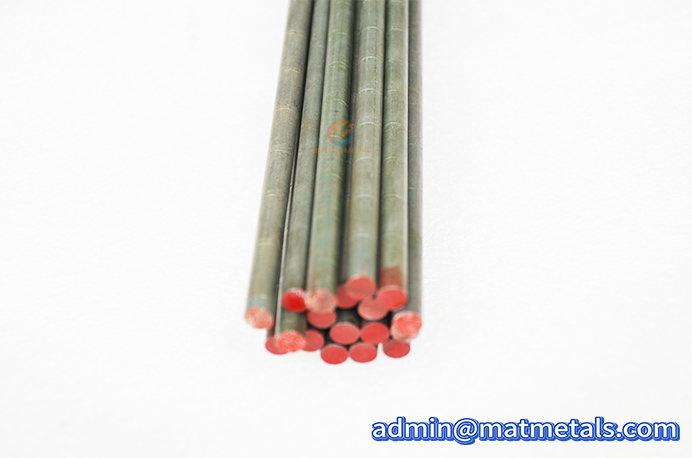
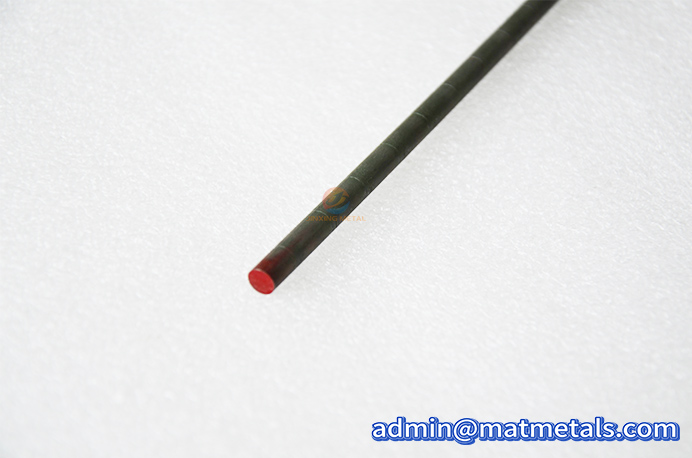
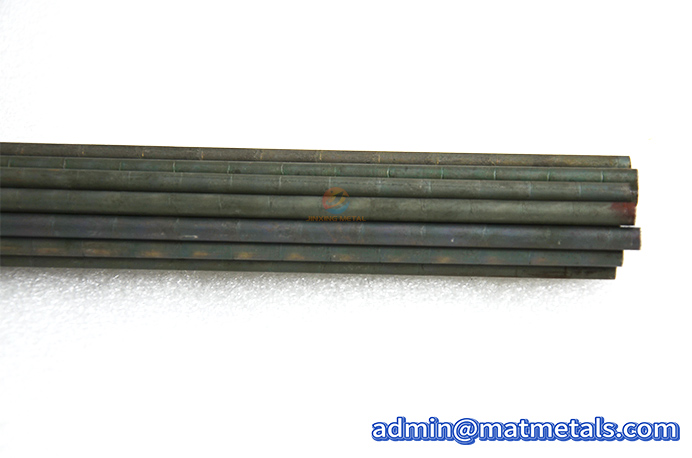
Stellite 6 Welding Rod is a cobalt-based carbide welding rod, mainly composed of cobalt (about 60%), chromium (26-32%), tungsten (4-6%) and carbon (0.9-1.4%) and other elements, with excellent wear resistance, corrosion resistance and high temperature performance, with a hardness of up to HRC 40-44, which is widely used in the manufacturing and repair of key components such as engine valves, high temperature and high pressure valve sealing surfaces, turbine blades, etc.
We can provide customers with one-stop services such as 24-hour fast quotation, high-quality customised production, efficient delivery, and perfect after-sales service. If you are interested in our products, please feel free to contact us.
Advantages
- Excellent wear resistance, high hardness while maintaining good toughness, not easy to crack and peel, and not easy to cold welding/bite death with wear parts at high temperature, suitable for valve sealing, shaft sleeve, and other dynamic sealing scenarios.
- Excellent high-temperature stability, withstands frequent hot and cold cycles (e.g., engine valves, steam turbine components), and is not prone to thermal cracking.
- Excellent corrosion resistance, acid and alkali resistance, and steam and seawater resistance; in most oxidation/neutral media, it is better than stainless steel.
- Good weldability, can be overlaid directly on carbon steel, alloy steel, and stainless steel, has high bond strength, and is not easy to peel.
Stellite 6 Welding Rod Dimension
| Grade | ST6 |
| Diameter | 2.7-4.8mm |
| Length | 1000mm or customised |
| Denity | 8.4-8.5 g/cm³ |
| Melting Point | 1265-1354°C |
| Hardness | HRC 40-44 |
| Tensile strength | 950-1150 MPa |
| MOQ | 5PCS |
| Delivery Time | 25-30DAYS |
| Certification | ISO 9001 |
How to choose
| Manual arc welding (SMAW) |
EStellite 6(AWS A5.13) |
The coating of this welding electrode is of the low-hydrogen type, providing excellent crack resistance. It offers the flexibility required for manual operation and is capable of handling the welding of complex components. |
Welding of small components (such as valve sealing surfaces, shaft repairs), welding of complex structural parts, suitable for carbon steel and alloy steel matrix |
| Tungsten Argon Arc Welding (GTAW/TIG) |
ERStellite 6(AWS A5.13) |
High purity, no interference from the drug skin, easy control of welding heat input, beautiful forming of the deposition layer, few defects, and accurate control of the thickness of the weld overlay. | Precision component overlay welding (such as aero engine valves, precision valve sealing surfaces), thin parts welding, and scenarios with high welding quality requirements |
| Submerged Arc Welding (SAW) |
HStellite 6(AWS A5.13) |
It is suitable for the high current and high-efficiency welding requirements of submerged arc welding, with high deposition efficiency and uniform weld forming, which can achieve mass production | Batch overlay of large components, thick-walled components, and a large-area wear-resistant layer overlay of industrial equipment |
| Plasma arc welding (PAW) |
ERStellite 6(AWS A5.13) |
The welding wire has a moderate melting point, high temperature resistance, and is suitable for the high temperature and high energy welding characteristics of plasma arc | Precision overlay welding of high-end components (such as gas turbine components), sealing surface overlay with high wear resistance requirements, and a thin and uniform wear layer overlay |
Application
1. Energy and electricity
Stellite 6 Welding Rod is mainly used for overlay welding of the sealing surface of various key valves (gate valves, globe valves, etc.) of thermal power and nuclear power to resist high-temperature steam scouring and corrosion, and ensure reliable sealing. At the same time, it is used for overlay welding of steam turbines, gas turbine blades, valve seats and other components, and can withstand high-temperature creep and thermal fatigue.
2. Petrochemical industry and oil refining
Stellite 6 Welding Electrode is suitable for high-temperature, high-pressure, and strong corrosion conditions, and is used for centrifugal pump shaft sleeves and various valve sealing surfaces. It is used for overlay welding of flanges and sealing rings of refining and chemical equipment; It can also be used for oil and gas exploitation wellhead devices and throttle parts overlay welding to ensure the stable operation of downhole equipment.
3. Aerospace
Stellite 6 Welding Rods are used for overlay welding of aero engine valves, nozzles and other components with excellent high temperature red hardness, resisting high-temperature gas scouring and thermal cycling to avoid failure; At the same time, it is used for the overlay repair of gas turbine components, high-temperature fasteners and wear parts of engine exhaust systems to ensure the safety of aviation equipment.
4. Mines and heavy machinery
It is used for overlay welding of hot rolls, hot forging dies, etc., to extend the service life of equipment; It is used for overlay repair of crusher hammer heads, liners, etc., to reduce component loss.
5. Shipbuilding and marine engineering
It is suitable for high salt and strong corrosion environments, and is used for overlay welding of marine valves and seawater pipeline valve seals to ensure reliable sealing. It is used for overlay welding of components such as wellhead valves on offshore platforms.
6. General machinery manufacturing
It is used for internal combustion engine exhaust valves and valve seat overlays to resist high-temperature gas corrosion; repair gears, shafts and other wearable parts to reduce replacement costs; It can also strengthen the working surface of the mould and tool to improve the durability of the tool.
Process
(1) Raw material ratio and melting: According to the precise ratio, cobalt, chromium, tungsten, carbon and other alloying elements, vacuum induction melting or electroslag remelting process is used to ensure the purity of the alloy and reduce the impurity of impurities
(2) Forming and processing: through horizontal continuous casting, forging or powder metallurgy processes to make billets, and then rolling, drawing and other treatments, processing into bar prototypes that meet specifications to ensure uniform composition
(3) Heat treatment: Solid solution, ageing, or tempering treatment of the bar to optimise the carbide distribution, improve the core properties such as hardness and toughness, and avoid cracks
(4) Surface and precision treatment: remove surface oxide layer and defects through grinding and polishing, accurately control the dimensional accuracy of the bar, and adapt to subsequent welding needs
(5) Quality inspection: Strictly test the composition, hardness, size and surface quality of the bar, and it can only be put into use after qualification, and quality certificates can be provided in some scenarios
Pictures
Please leave your information to get the latest quotation and product catalogue!