


Product Description
Overview
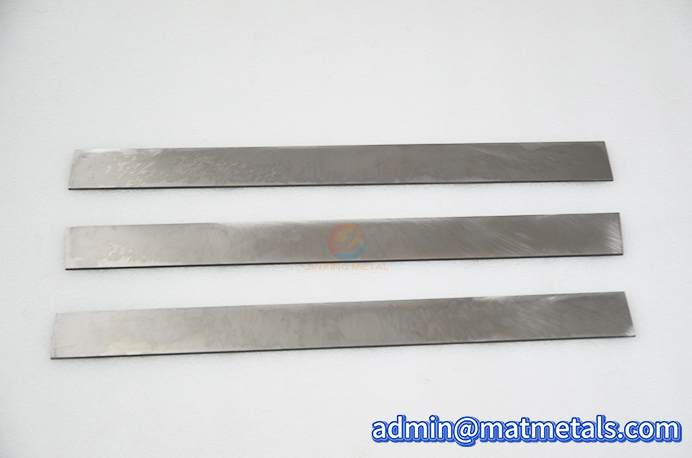
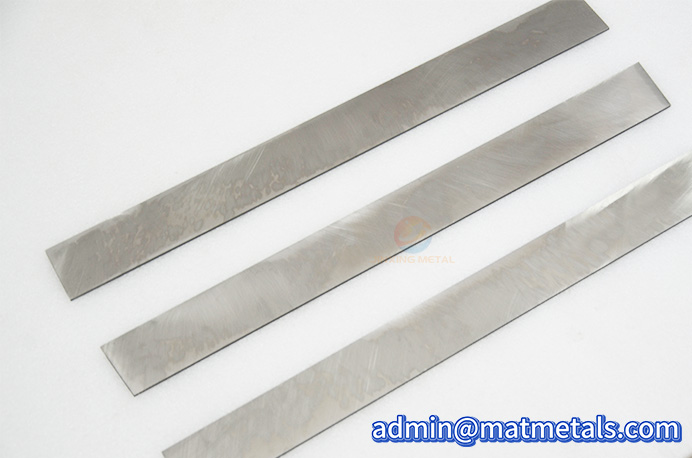
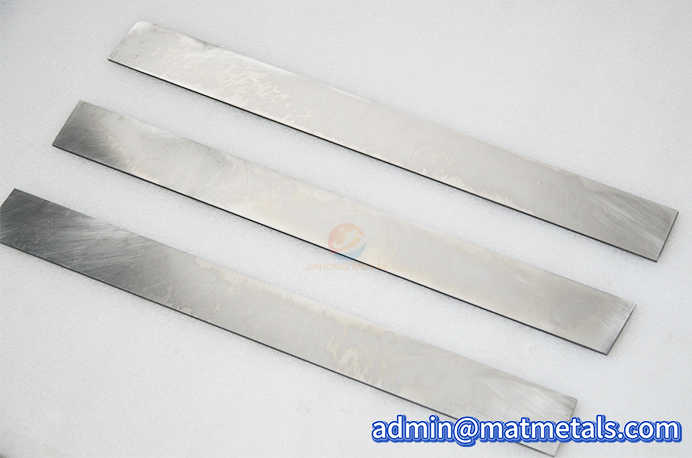
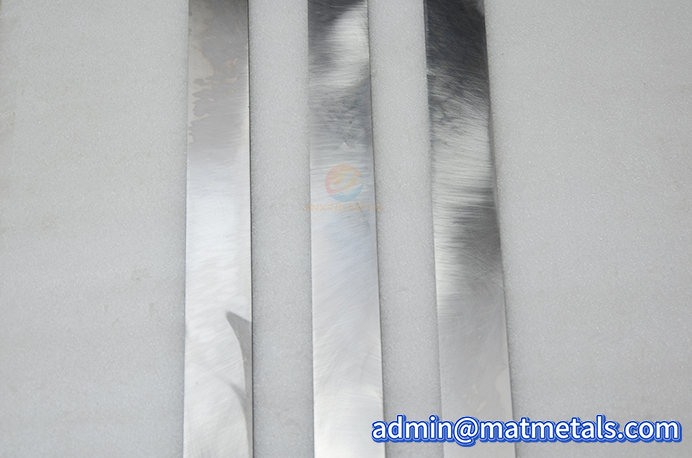
Stellite 6K is a cobalt-based alloy often used for industrial cutting tools, including long blades for applications like slitting, shearing, and processing in sectors such as food, textiles, and packaging. Stellite 6K Cutting Blade is made from this cobalt-chromium alloy, prized for its superior wear resistance, corrosion protection, and ability to withstand extreme temperatures and mechanical stress.
These blades are commonly used in industrial settings, such as food processing, slitting, and high-volume production equipment, where long-life precision cutting is essential, even under corrosive conditions. With a hardness around 45 HRC, Stellite 6K long blades outperform many traditional steels in durability but may be softer and more brittle in some knife applications.
Stellite 6K Advantages
1. Exceptional wear resistance
- Wear resistance is 5-8 times that of ordinary tool steel, making it particularly suitable for high-stress abrasive wear environments.
- During cutting operations, the cutting edge exhibits extremely low wear rates, significantly extending service life.
2. Outstanding Edge Retention
- The cutting edge maintains sharpness four times longer than tool steel.
- With approximately 50% higher carbon content than Stellite 6B, it achieves greater hardness (HRC 43-47) and sustained edge sharpness.
- It maintains stable sharpness during high-speed cutting and continuous operation.
3. Superior High-Temperature Stability
- Maintains high hardness and strength at 900°C.
- At 800°C, tensile strength ≥550MPa and yield strength ≥400MPa.
- Outstanding creep resistance with deformation rate <0.8% under extremely high-temperature conditions.
4. Excellent corrosion resistance
- Demonstrates outstanding tolerance to diverse corrosive media, including acids, alkalis, and saline solutions, making it suitable for chemical processing environments.
- Resists rusting in humid or corrosive conditions while maintaining stable performance.
5. Unique toughness and impact resistance
- The cobalt-based matrix imparts excellent toughness, preventing edge chipping and extending service life.
- Exceptional fatigue resistance renders it ideal for applications involving alternating loads.
Stellite 6K Cutting Blade Dimension
|
Element |
Content |
Function |
|
Cobalt (Co) |
Matrix (approximately 60%) |
Provide resilience and fatigue resistance |
|
Chromium (Cr) |
28-32% |
Enhanced corrosion resistance and oxidation resistance |
|
Tungsten (W) |
3.5-5.5% |
Forming high-hardness carbides to enhance wear resistance |
|
Carbon (C) |
1.4-1.9% |
Forms hard carbides with tungsten and chromium |
|
Other |
Trace amounts (Ni, Si, Fe, etc.) |
Optimise overall performance |
| Grade |
6K |
| Thickness |
0.5-10mm |
| Length |
500-1500mm |
| Width |
30-90mm |
| Hardness |
43-47 HRC |
| Density |
8.3-8.5g/cm³ |
|
Tensile Strength |
862-1300MPa |
|
Elongation |
≥24% |
| MOQ |
2PCS |
| Surface |
Polishing, Grinding, Black |
| Certification |
ISO 9001 |
Stellite 6K Cutting Blade Application
I. Stellite 6K Industrial Knife in the Chemical Fiber and Textile Industry
- Viscose Fiber Cutting Knife: Cuts fibers in corrosive solutions, increasing lifespan by 5-10 times and cutting efficiency by 40%.
- Short Chemical Fiber Cutting: Standard size 30×50×L (customizable), used to cut continuous filaments into short fibers of a fixed length.
- Textile Fabric Cutting: Used for fabric slitting and strip cutting, producing clean, burr-free cuts.
II. Stellite 6K Knife in the Woodworking Industry
- Band Saw Blades: Used for cutting hardwoods (mahogany, rosewood, etc.) and softwoods (pine, poplar).
- Circular Saw Blades: Suitable for high-precision cutting of various woods and bamboo.
- Woodworking Planer Blades: Maintain stable cutting performance in high-temperature and high-humidity environments.
III. Cobalt Alloy Blade in the Plastics and Rubber Industry
- Plastic Sheet Cutting Knife: Used for PP, PE, and sheet metal cutting
- Pipe cutting blades: used for fixed-length cutting of various plastic pipes
- Sealing strip cutting blades: used for manufacturing high-precision automotive parts
Process
① Initial Forming: Initial blanks are formed by casting or powder metallurgy using components such as cobalt, chromium, tungsten, and carbon. Casting is suitable for complex parts but is prone to porosity; powder metallurgy offers precise composition control and is often used for small parts.
② Hot Forging and Hot Rolling: Hot forging improves the microstructure and mechanical properties of the material, transforming the alloy into sheet metal. Hot rolling then reduces internal defects through continuous pressure, producing thin sheets or strips from 0.045 inches to 0.375 inches in thickness, with custom specifications available to meet long blade requirements.
③ Cutting and Forming: Rough blanks are cut from rolled sheet metal, and then an alloy coating is deposited onto the steel substrate using deposition technology to form the long blade shape.
④ Finishing and Sharpening: Due to the high hardness and difficulty in machining the material, coated carbide tools are primarily used for surface finishing through grinding, ensuring corrosion resistance and high-temperature resistance, suitable for high-impact environments.
⑤ Surface Strengthening (Optional): To further extend blade life, surface coating treatments (such as TiAlN coating) or laser surface strengthening may be applied to reduce the coefficient of friction. ⑥ Full-process quality inspection
For example, dimensional accuracy, blade sharpness, straightness, mechanical properties, non-destructive testing, etc., to ensure that products meet international standards before leaving the factory.
Stellite 6K Cutting Blade Pictures
Please leave your information to get the latest quotation and product catalogue!